

The IVF journey is one of the most structured fertility treatments available today. Knowing the timeline in advance turns a complex medical pathway into a clear plan you can follow. This guide walks through the IVF process and timeline from start to finish, explaining the typical IVF schedule, how the steps line up on a day-by-day basis, and what changes when you follow a long or short protocol. It also covers the period after embryo transfer, when to test, and how the IVF timeline looks in the UK context. Where helpful, we link to deeper resources so you can keep exploring.
Understanding the IVF Process
What is IVF and who is it for?
IVF (in-vitro fertilisation) involves retrieving mature eggs from the ovaries, fertilising them with sperm in a laboratory, and transferring one or more embryos into the uterus. It is recommended for patients with blocked or damaged fallopian tubes, ovulation disorders (including PCOS), endometriosis, male factor infertility, and unexplained infertility, as well as for single parents and same-sex couples using donor gametes. If you are assessing whether IVF is the right pathway, start with the overview of tests, protocols, and indications in our clinic guide to IVF Treatment.
Key stages in the IVF timeline
Although treatment is individualised, the IVF stages timeline typically follows the same core steps:
- Preparation and counselling (medical review, consent, treatment plan).
- Ovarian stimulation with daily medication and monitoring.
- Egg retrieval under light sedation.
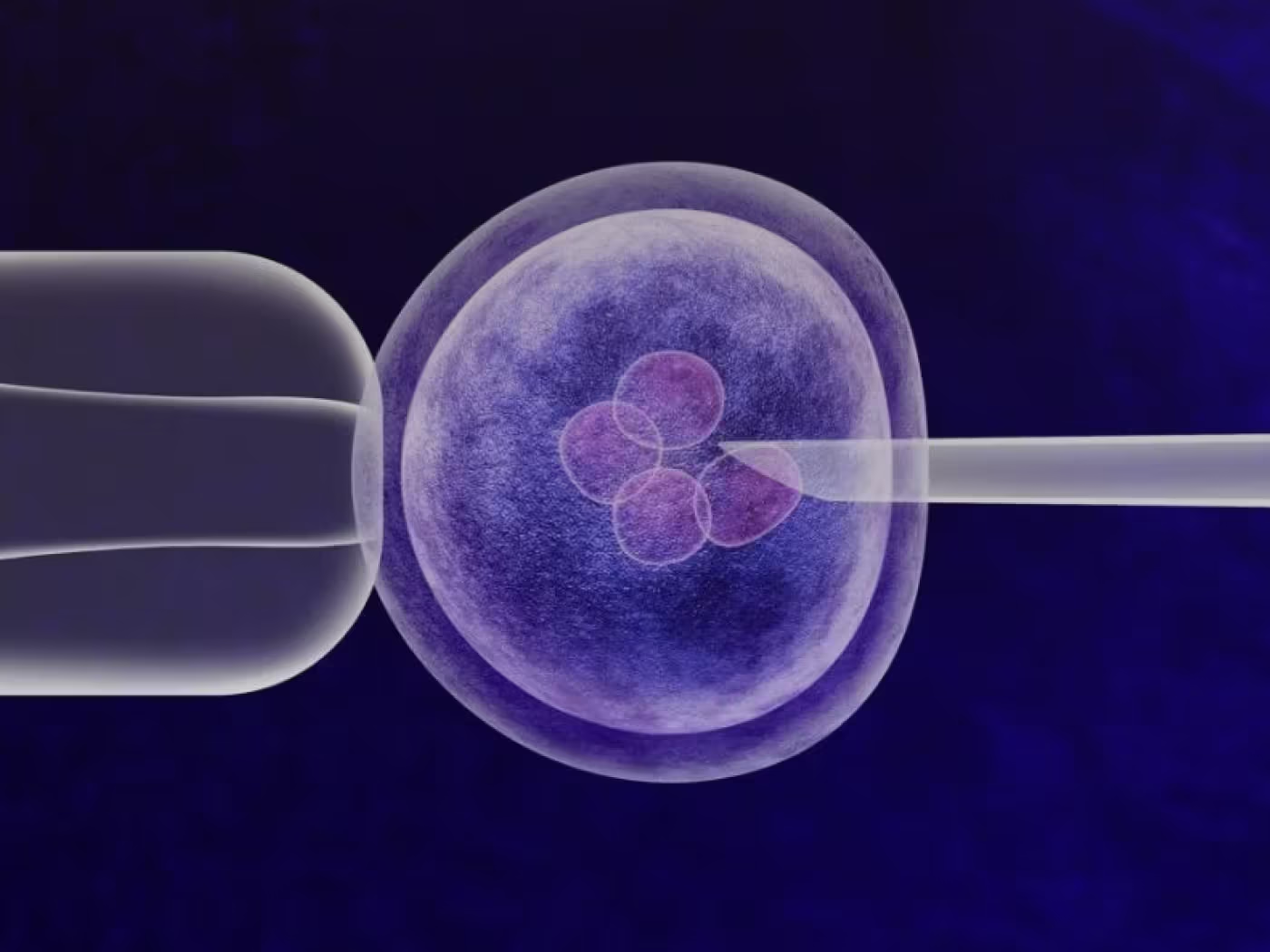
- Fertilisation (conventional IVF or ICSI) and embryo culture.
- Embryo transfer on day 3 or day 5 (fresh) or later (frozen).
- The two-week close monitoring, then a pregnancy test.
This is the foundation for the IVF process start to finish timeline. Variations come from protocol type (long vs short), the choice of fresh vs frozen embryo transfer, and personal response to medication.

IVF Day-by-Day: Typical Schedule Explained
A practical way to understand the journey is to view the IVF day by day schedule. Clinics adapt timing to follicle growth and hormone levels, but the overall rhythm usually looks similar from one cycle to the next.
The long protocol IVF timeline
The long protocol suppresses the natural cycle before stimulation, giving clinicians greater control. A simple way to imagine this is “quiet, build, collect, transfer”:
- Downregulation (previous cycle, ~Day 1–21): Medication suppresses natural hormones and prevents premature ovulation.
- Stimulation (new cycle, starting Day 1): Daily gonadotropin injections encourage multiple follicles to grow.
- Monitoring (throughout stimulation): Ultrasound scans and blood tests are performed daily or every other day to fine-tune medication, optimise trigger timing, increase the chances of retrieving more mature eggs, and improve fertilisation rates.
- Trigger (Day 12–14): A timed injection matures eggs for retrieval.
- Egg retrieval (Day 14–16): Outpatient procedure under sedation.
- Embryo culture (Day 16–19): Eggs are fertilised; embryos grow.
- Embryo transfer (Day 19–21): Embryo(s) placed into the uterus.
- Two-week wait: After embryo transfer, you wait until the pregnancy test — typically around 10–12 days after a day-5/6 transfer, or 12–14 days after a day-3 transfer. No further procedures are done during this time, but you continue medications and monitoring as advised.
The short protocol IVF timeline
The short protocol skips downregulation and goes straight to stimulation early in the menstrual cycle:
- Stimulation (Cycle Day 2–3): Start daily injections.
- Monitoring (Day 5–9): Scans and blood tests every 1–2 days.
- Trigger (Day 10–12) and egg retrieval (Day 12–14).
- Embryo development (Day 14–17) and transfer (Day 17–19).
- Two-week wait: After embryo transfer, you wait for the pregnancy test — usually 10–12 days after a day-5/6 transfer or 12–14 days after a day-3 transfer. There are no daily scans or blood tests during this period; instead, you continue your medications and await the result.
Because suppression is not used, the short cycle IVF timeline can be faster and is suitable for many patients, including those with PCOS, since it lowers the risk of ovarian hyperstimulation syndrome (OHSS). Many clinics also use it as a standard approach for a wide range of patients because it offers a gentler medication load and quicker treatment. In content and patient materials you may also see it described as an IVF cycle timeline short protocol or short IVF protocol timeline.
Step-by-Step IVF Timeline from Start to Finish
Ovarian stimulation phase
Stimulation is the engine room of the IVF schedule timeline. Daily injections (sometimes with an antagonist to prevent premature ovulation) help multiple follicles grow at once. Most patients attend the clinic for ultrasound and blood tests every other day for the precise and detailed monitoring to improve the outcome. Common experiences include mild bloating, abdominal fullness, and emotional sensitivity; most people continue normal life with small adjustments to activity and hydration.
From an organisational point of view, it helps to use an IVF calendar schedule: note your injection times, scan dates, and when to collect prescriptions. Your nurse will keep an eye on your IVF med schedule so that doses match your response and safety remains the priority.
Egg retrieval and fertilisation
When several leading follicles reach the target size, your team sets a precise time for the trigger injection. Egg retrieval follows around 36 hours later. The procedure itself typically takes 15–30 minutes; you then rest briefly in recovery. The lab immediately begins the IVF fertilization timeline (in UK materials you may also see “fertilisation”), using either conventional IVF or ICSI depending on sperm parameters and your plan.
Embryo development in the lab
Once fertilisation is confirmed (usually the next day), the embryos grow in carefully controlled conditions. On day 3 many embryos are at the 6–8-cell stage; by day 5 the strongest reach the blastocyst stage, which often gives clearer selection signals. Some embryos may be frozen for later use. If you are using PGT-A or other advanced options, this part of the IVF stages timeline is where additional biopsy and lab work occur.
Embryo transfer timeline
The embryo transfer IVF timeline differs depending on whether your clinic transfers on day 3 or day 5, and whether you are doing a fresh or frozen cycle. The transfer itself is a quick, usually painless procedure using a thin catheter. You can walk out of the clinic soon afterwards. Many patients use a simple calendar for IVF to mark light activity days after transfer and reminders for medication.
After embryo transfer – the two-week wait
The period after transfer is psychologically intense. Biologically, the embryo must attach and begin signalling with rising hCG. You may notice mild cramping, spotting, breast tenderness, or nothing at all—both are normal. This is the IVF after transfer timeline (often called the post IVF transfer timeline or timeline after IVF transfer). During the TWW, clinics often schedule blood tests to check hormone levels (such as progesterone and full blood count) and, in some cases, to track early hCG changes, ensuring the uterine environment remains supportive. If you find yourself anxious, structured support helps: see our Pregnancy Monitoring page for information on blood tests, symptom guidance, and when to call the clinic.
Example: IVF Day-by-Day Schedule (illustrative)
This kind of IVF timeline calendar makes it easier to see the arc of the cycle and reduces the chance of missed doses or appointments.
Fresh vs Frozen Cycle: How the Timelines Differ
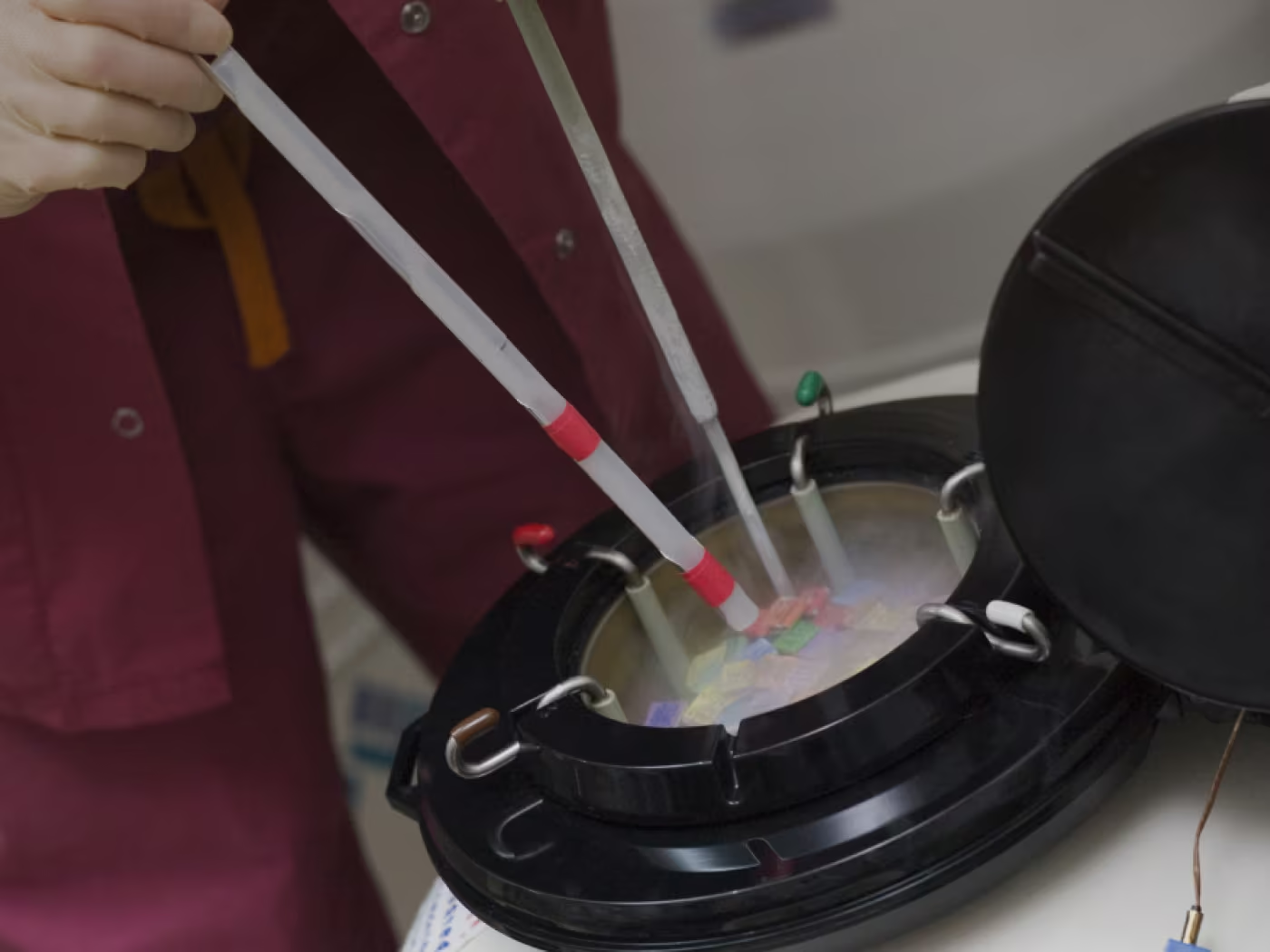
In a fresh cycle, embryos are transferred within the same cycle as retrieval. You move directly from stimulation and egg collection to transfer and then into the two-week wait. In a frozen cycle, embryos are thawed and transferred in a later, prepared cycle, which can be natural (following your ovulation) or medicated (lining prepared with oestrogen and progesterone). A frozen cycle gives flexibility if recovery is needed, if you are awaiting PGT-A results, or if your clinic recommends a freeze-all approach.
Key contrasts patients often consider:
- Timing: Fresh is faster; frozen allows more control over endometrial timing.
- Medication: Frozen transfers may involve more lining preparation; fresh cycles carry the medication load of stimulation.
- Symptoms: Some people feel better spacing stimulation and transfer.
- Outcomes: Fresh embryo transfer generally shows slightly higher success rates overall, particularly in younger patients. Frozen embryo transfer (FER) is beneficial in reducing the risk of OHSS and allows for more controlled endometrial preparation, but success rates are typically a little lower than with fresh transfers. An exception is in older patients using PGT-A tested embryos, where frozen transfers may offer an advantage.
For a deeper dive into lab techniques, PGT options, and endometrial preparation, explore Advanced Treatments IVF.

IVF Timeline After Transfer and Pregnancy Testing
When to test after embryo transfer
A universal question is what the IVF embryo transfer timeline means for testing. For day-5 blastocysts, clinics commonly recommend testing 9–12 days after transfer; for day-3 embryos, 12–14 days is typical. Blood tests (β-hCG) arranged by your clinic detect pregnancy earlier than home kits and avoid many of the timing pitfalls. Testing too early can lead to false negatives and needless worry.
Using an IVF pregnancy calendar
A pregnancy calendar IVF tool helps translate embryo age and transfer date into expected testing windows, scan dates, and estimated due dates. Patients often refer to this as an IVF pregnancy due date calendar. These tools use the retrieval or transfer date to generate an IVF calendar due date (sometimes called the IVF pregnancy calendar due date). They are particularly helpful for planning early scans, managing travel, and thinking ahead to work leave.
IVF Timeline in the UK – What’s Different?
The IVF timeline UK reflects the UK’s regulatory framework and the mix of NHS and private care:
- Access and waiting times: NHS pathways may involve waiting periods and criteria for eligibility, which affect when your cycle begins. Private pathways usually offer more scheduling flexibility.
- Clinical governance: UK clinics follow strict guidelines about embryo numbers transferred, consent, and reporting, shaping the typical IVF calendar and safeguards.
- Protocols: The long protocol IVF timeline UK often includes closer monitoring and clear thresholds for trigger to optimise safety and success.
- Support services: Psychological support, counselling, and group education sessions are widely available and can be booked alongside your visits.
Patients frequently ask “what is the IVF process timeline in the UK?” and “what is the timeline for IVF if I’m moving between NHS and private?” In practice, your typical IVF schedule remains similar; the differences are administrative and logistical rather than biological.
Final Thoughts: Navigating the IVF Journey with Confidence
Understanding the IVF start to finish timeline turns a demanding process into a sequence of manageable steps. Use an IVF timeline from period day 1 to map scans and injections; keep a written or digital calendar for IVF so the practical pieces stay simple; and lean on your team for clarity when plans adjust. To recap:
- A typical IVF timeline by day spans 4–6 weeks from stimulation start to pregnancy test.
- The long protocol offers control via suppression; the short protocol moves faster with fewer preliminaries.
- The IVF transfer schedule (day 3 vs day 5, fresh vs frozen) depends on lab findings and your plan.
- After IVF transfer, prioritise calm routines and strict medication adherence, and attend scheduled blood tests during the two-week wait (e.g., progesterone, oestrogen and, where indicated, early hCG) so your team can adjust support and optimise implantation conditions.
- If you like structure, a calendar IVF cycle timeline brings order to the emotional two-week wait.
Every journey is unique. Whether you follow a classic long protocol IVF timeline or a short protocol route, you will move through the same core milestones. When you want more data or reassurance between appointments, our Pregnancy Monitoring options can help you feel supported day to day.


.webp)




.webp)
.webp)
.webp)
.webp)
.webp)