


Navigating the world of IVF can bring up many questions. One topic often discussed is PGT-A, or Preimplantation Genetic Testing for Aneuploidy. But what is it, and who is it for?
What does PGT-A test for?
Simply put, PGT-A is a genetic test performed on embryos created through IVF before they are transferred to the uterus. It checks if the embryo has the correct number of chromosomes. In other words, PGT-A testing embryos helps identify which embryos are more likely to develop into a healthy pregnancy.
What are the benefits of PGT-A testing?
A major benefit of PGT-A testing is potentially reducing the heart-breaking risk of miscarriage. Many early miscarriages happen because of chromosome abnormalities, which PGT-A aims to detect beforehand.
It can also reduce the chance of conceiving a pregnancy affected by conditions caused by having too many or too few chromosomes, like Down’s syndrome. According to a 2019 study from the University of Oxford, up to 50% of early pregnancy losses in women over 40 are linked to chromosomal errors. By identifying these, PGT-A test IVF cycles can be more efficient and less emotionally draining.
What are the limitations of PGT-A?
However, there are important considerations. Firstly, PGT-A requires embryos to develop to the blastocyst stage (around day 5 or 6), and unfortunately, not all embryos reach this stage.
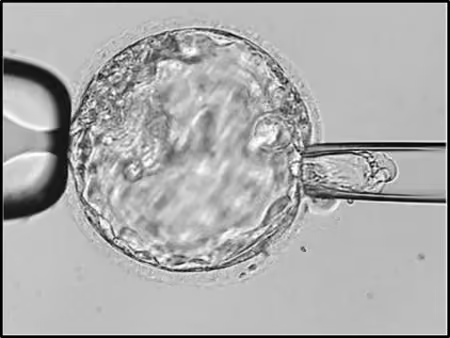
The process involves taking a small biopsy from the embryo, and usually requires the embryos to be frozen while waiting for results. Both the biopsy and the freeze-thaw cycle can potentially stress the embryo.
This testing also means delaying the embryo transfer. You’ll typically have your egg collection cycle, the embryos are tested and frozen, and then you’ll need a separate cycle later for the transfer. This adds time and, significantly, extra cost to the IVF process.
It’s also crucial to know PGT-A isn’t 100% accurate. Sometimes results can be unclear, showing ‘mosaicism’ – where an embryo has a mix of normal and abnormal cells – which makes decisions complex and requires careful discussion.
Because of factors like needing blastocysts and the potential impact of the procedures, the testing process might result in fewer embryos being available for transfer overall.
Who might benefit most from PGT-A testing in IVF?
So, who should we consider PGT-A for? Often, it’s individuals of advanced maternal age, as egg quality and chromosome errors increase with age. Also, those with a good number of eggs, providing more embryos to test. It may also be considered for those with a history of recurrent miscarriages potentially linked to chromosome issues.
Couples with unexplained infertility, or those who have undergone multiple failed IVF cycles, sometimes consider PGT-A as part of their treatment plan. Research from the American Society for Reproductive Medicine (ASRM, 2021) shows that while PGT-A does not guarantee success, it may improve the efficiency of IVF cycles in women aged 38–42 by selecting embryos with normal chromosomal patterns.
What is the difference between PGT-A and PGS embryo testing?
The terms PGT-A and PGS embryo testing are often used interchangeably. PGS (Preimplantation Genetic Screening) was the older name for this procedure, but the medical community has shifted to PGT-A to reflect more accurate terminology. If you come across articles about “what is PGT test” or “PGT embryo screening,” they are referring to the same concept.

Making your decision: is PGT-A right for you?
PGT-A is a complex decision with real pros and cons. For some, it helps avoid multiple failed cycles and reduces the risk of miscarriage. For others, it may not be necessary and could add stress or cost.
The best step is always to have an in-depth conversation with your fertility specialist about your specific situation. You can also explore resources such as our advanced IVF treatments guide or learn about navigating the challenges of infertility and IVF to prepare for your journey.



.webp)





.webp)
.webp)
.webp)
.webp)
.webp)

.avif)