

How to Get Pregnant Faster: TTC Tips That Actually Work
Quick answer: The single most effective way to conceive faster is to have regular sex (every other day) across your fertile window, the roughly six days ending on the day of ovulation. Beyond timing, the evidence points to a short list of things that genuinely help: taking folic acid, keeping a healthy weight, stopping smoking, moderating alcohol and caffeine, and not delaying if age or a known condition is a factor. Most “hacks” beyond these make little measurable difference.
Search results on getting pregnant faster are full of positions, diets, and gadgets. Some of it is harmless; some of it adds stress without adding results. This article strips it back to what the evidence actually supports, starting with the one thing that matters most, then the lifestyle factors worth your attention, and the point at which “trying harder” should become “getting checked.”
For the flip side (when difficulty conceiving is worth investigating), see How Long to Try Before Seeing a Specialist.
First: understand your fertile window
Conception is only possible for a short window each cycle. An egg survives around 12-24 hours after ovulation. Sperm can survive in the reproductive tract for up to about five days. Put together, the fertile window is roughly the six days ending on the day of ovulation: the five days before, plus ovulation day itself.
Having sex during this window is the highest-impact thing you can do. Everything else is secondary.
You don’t need to pinpoint ovulation to the hour. Regular sex across the whole window covers it, which is why the simplest advice is often the most effective.
The most effective tip: regular sex, well-timed
The clearest, best-supported advice is this: have sex every other day throughout your cycle, and especially across the fertile window. That frequency means sperm is reliably present whenever ovulation happens, without needing to track anything precisely.
This matters because a lot of couples unintentionally reduce their chances by “saving up” for ovulation day, then mistiming it. Regular sex removes the guesswork. If you’d rather target more precisely, the ovulation-tracking methods below help, but frequency alone is powerful on its own.
How to track ovulation (if you want to)
Tracking helps you concentrate effort on the right days. A few reliable methods, roughly in order of ease:
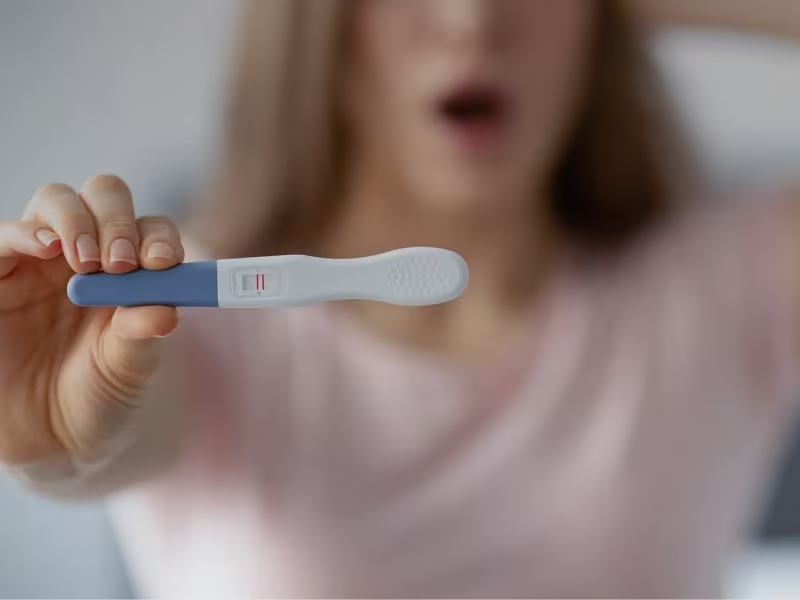
Ovulation predictor kits (OPKs) detect the surge in luteinising hormone (LH) that happens 24-36 hours before ovulation. A positive test means the fertile window is open now. These are the most practical tool for most people.
Cervical mucus changes across the cycle, becoming clear, stretchy, and slippery (like raw egg white) around ovulation. It’s a free, surprisingly reliable signal once you know what to look for.
Basal body temperature (BBT) rises slightly after ovulation. It confirms ovulation happened rather than predicting it in advance, so it’s more useful for learning your pattern over a few cycles than for timing a single one.
Cycle apps estimate your window from your dates: helpful as a rough guide, but less accurate than OPKs or mucus tracking, especially if your cycles are irregular.
Lifestyle factors that genuinely matter
The evidence on lifestyle is less dramatic than the internet suggests, but a handful of things clearly help, for both partners.
Take folic acid. Start at least the recommended dose before conception. It doesn’t speed conception, but it substantially reduces the risk of neural tube defects, so it’s a non-negotiable part of trying.
Aim for a healthy weight. Being significantly under- or overweight can disrupt ovulation and reduce sperm quality. Even modest movement toward a healthy range can restore more regular cycles.
Stop smoking, both partners. Smoking is linked to reduced fertility in women and lower sperm quality in men, and it’s one of the clearest modifiable factors.
Moderate alcohol and caffeine. Heavy drinking affects fertility for both partners; keeping caffeine to around one to two cups of coffee a day is a sensible ceiling while trying.
Look after sperm health too. Sperm takes around three months to develop, so changes the man makes now show up months later. Avoiding excess heat, smoking, and heavy drinking, and keeping active, all help.
Manage stress where you can, without adding pressure. Stress is unlikely to be the reason conception isn’t happening, and being told to “just relax” is rarely helpful. But sustainable sleep and stress management support overall health, which supports fertility.
What doesn’t reliably work: specific positions, lying still for long periods afterwards, elaborate diets, or most supplements marketed for fertility. Save your energy for the things above.
Don’t let “trying faster” delay getting checked
There’s a point where the most effective way to get pregnant faster is not another month of trying; it’s an assessment. If you’re under 36 and have been trying for a year, 36 or over and trying for six months, or you have irregular periods or a known condition, getting checked is the faster route, not the slower one.
Age is part of this. Because egg quality and quantity decline over time, “we’ll give it another year” can quietly cost more than it saves. Knowing where you stand, through simple tests like AMH and a semen analysis, often clears the path faster than persistence alone.
Frequently asked questions
How can I get pregnant faster naturally? Have sex every other day across your fertile window (the six days ending on ovulation), take folic acid, keep a healthy weight, stop smoking, and moderate alcohol and caffeine. Timing and consistency matter more than any single trick.
When is the best time to conceive in my cycle? The fertile window is roughly the five days before ovulation plus ovulation day. In a textbook 28-day cycle, ovulation is around day 14, but it varies; ovulation predictor kits and cervical mucus changes help you find your own timing.
How long does it usually take to get pregnant? For a healthy couple, around 20-25% per cycle, with most conceiving within a year of regular unprotected sex. Taking a few months is normal, not a warning sign.
Do supplements help me conceive faster? Folic acid is essential for reducing neural-tube-defect risk, but no supplement reliably speeds conception. Discuss any others (such as CoQ10 or vitamin D) with your doctor rather than self-prescribing.
Does stress stop you getting pregnant? Stress is very unlikely to be the sole reason conception isn’t happening, and “just relax” isn’t useful advice. Looking after sleep and wellbeing supports general health, but if you’re not conceiving, get assessed rather than blaming stress.
Key takeaways
- The fertile window is the ~6 days ending on ovulation; regular sex every other day covers it.
- Ovulation kits and cervical-mucus changes help you target timing if you want to.
- Folic acid, healthy weight, not smoking, and moderating alcohol/caffeine are the lifestyle factors that genuinely help, for both partners.
- Sperm takes ~3 months to develop, so the man’s changes matter too.
- Don’t let “trying faster” delay an assessment when age or a known condition is a factor.
Getting pregnant faster is mostly about timing well and looking after the basics, then knowing when persistence should give way to a proper check.



.webp)


.webp)
.webp)
.webp)
.webp)
.webp)

.avif)